
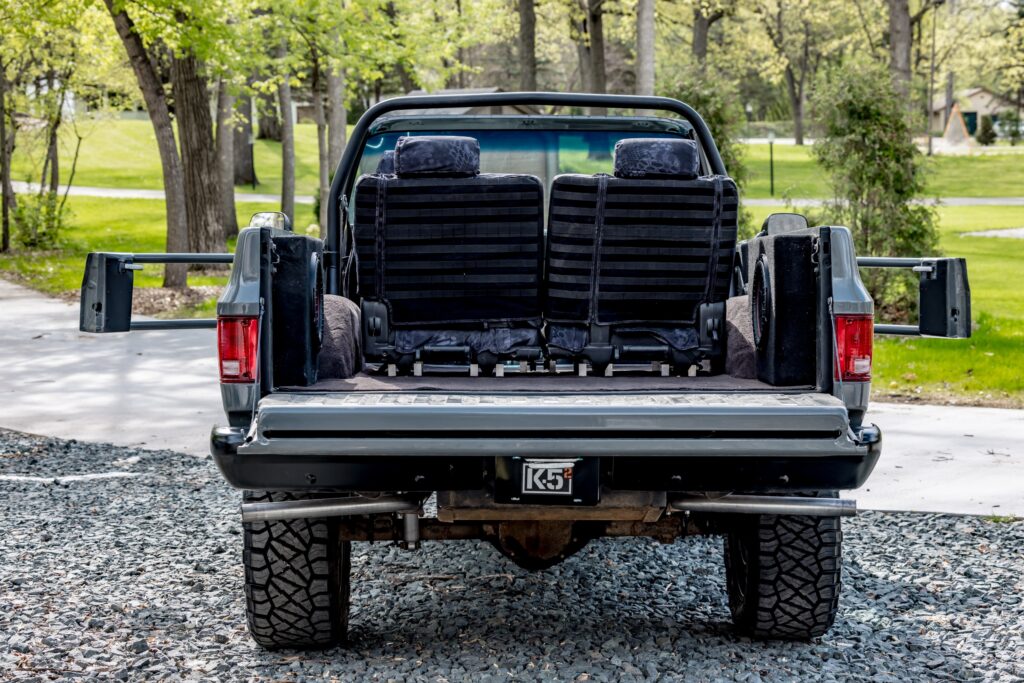
Sooner or later, almost every owner of a 1967–1991 Chevy or GMC 4×4 reaches the same crossroads. The body is worth saving. The frame beneath it is forty-plus years old, has endured decades of road salt, torque and potholes, and quietly sets the limit on every upgrade bolted to it. A frame swap, setting the original body on a new chassis, is how you fix the foundation instead of patching around it.
This guide explains what a squarebody frame swap actually involves, what separates a clean swap from a miserable one, and how a purpose-built chassis simplifies the job for K5 Blazers, Jimmys, K10 pickups and Suburbans.
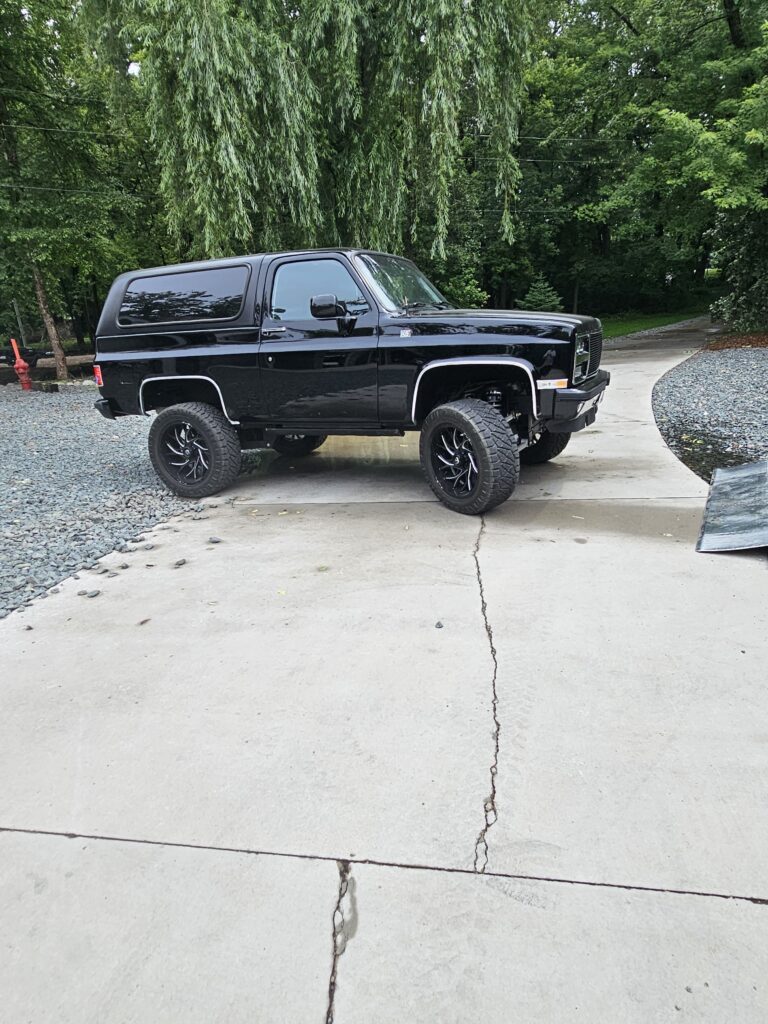
Using a donor frame sounds economical, and plenty of people have done it. In practice the wheelbase, body mounts, steering, fuel tank, bumpers and crossmembers rarely line up, so the swap becomes a fabrication project. The result is only as good as the person doing the cutting and welding, and it is difficult to predict the final cost.
Blasting, repairing and boxing the factory frame keeps the truck original. It does nothing, however, to change the suspension design, and you are still investing in steel that has already lived a long life.
A chassis engineered for your specific truck is designed around the factory body mounts and proportions, so the body goes on without cutting or relocating mounts. You get new steel, modern suspension geometry and a known finished result instead of a fabrication gamble.
Whichever route you choose, the same systems have to be planned for. Working through them early keeps a swap from stalling halfway through.
Frame-Werx builds custom independent front suspension chassis for 1967–1991 GM 4×4 trucks. The engineering was developed using a 1984 CUCV military K5 Blazer as the template, and every chassis preserves the correct body mounting points and proportions of the original design.
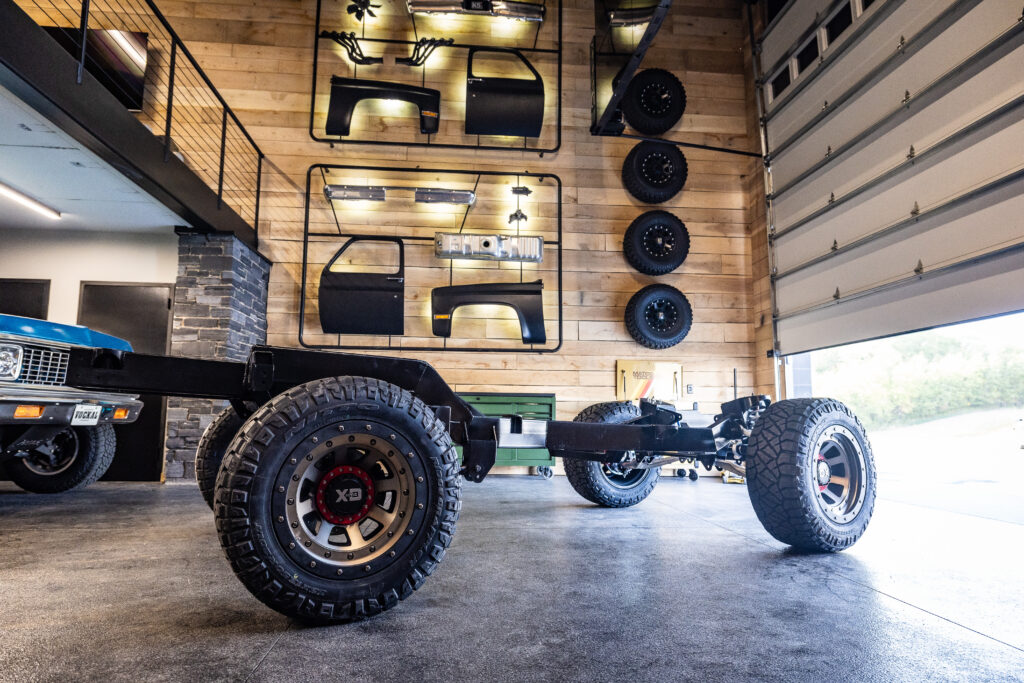
You also choose how far the chassis goes before it ships. The starting point is a bare hot-dip galvanized frame at $17,900. From there you can add suspension, brakes and axles for a rolling chassis, or a complete drivetrain package. If you already own some of the parts, a parts-only list is available too. The chassis builder walks through every choice and totals it as you go.
It can, but a donor frame rarely matches the wheelbase, body mounts, steering and fuel tank of a 1973–1991 truck, so the swap turns into a custom fabrication job. A chassis built for the truck avoids that work because it is designed around the factory mounts.
No. The Frame-Werx chassis keeps the correct factory body mounting points and proportions and bolts to the factory body mounts.
Yes. Frame-Werx builds for the 1973–1991 Suburban as well as single cab and crew cab pickups in short box and long box configurations.
A bare hot-dip galvanized Frame-Werx frame starts at $17,900. The total depends on how complete you want the chassis, from bare frame to a rolling chassis to a full drivetrain package. See what a K5 Blazer chassis costs, or price your own in the chassis builder.
Ready to see what your build looks like? Spec your chassis in the Frame-Werx builder. Frame-Werx chassis are sold through K5 Squared and ship across the country and overseas.