
Modern Ride Quality for Your Restomod Truck
Your classic truck was built for a 55 mile-an-hour world. When these Blazers, Jimmys, Suburbans and pickups rolled off the line, highways were slower and a truck was a tool. The solid front axle and stacked leaf springs did their job: they hauled, they towed and they refused to quit. What they were never asked to do was carry you down the interstate at 75 alongside modern traffic, settle over a broken patch of pavement, or hold a clean line through a sweeping on-ramp.
A Frame-Werx chassis keeps the truck you love and changes the way it drives. The goal is simple: modern ride quality for your restomod truck.
Where the ride comes from
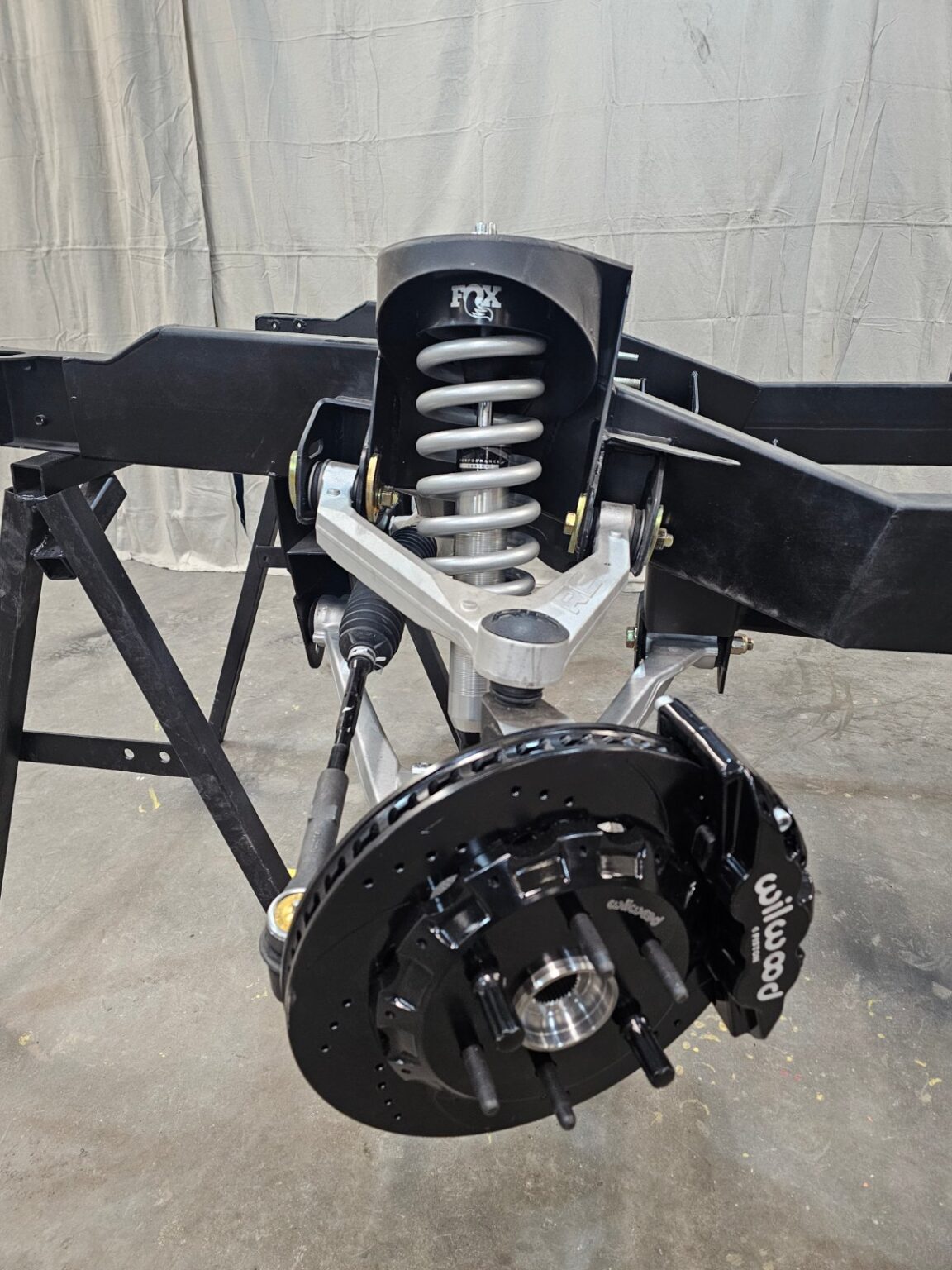
Independent front suspension
With a solid axle, a bump under one front tire rocks the whole front of the truck. Independent front suspension lets each front wheel move on its own, so the tire follows the road while the cab stays settled. Steering gets lighter and more precise, the truck tracks straight at speed, and it turns noticeably tighter than the original setup.
Sway bars, front and rear
Sway bars at both ends keep the body flat when you turn, change lanes or catch a gust on the highway. Less lean means a truck that feels planted instead of top-heavy, and a driver who is not bracing for every corner.
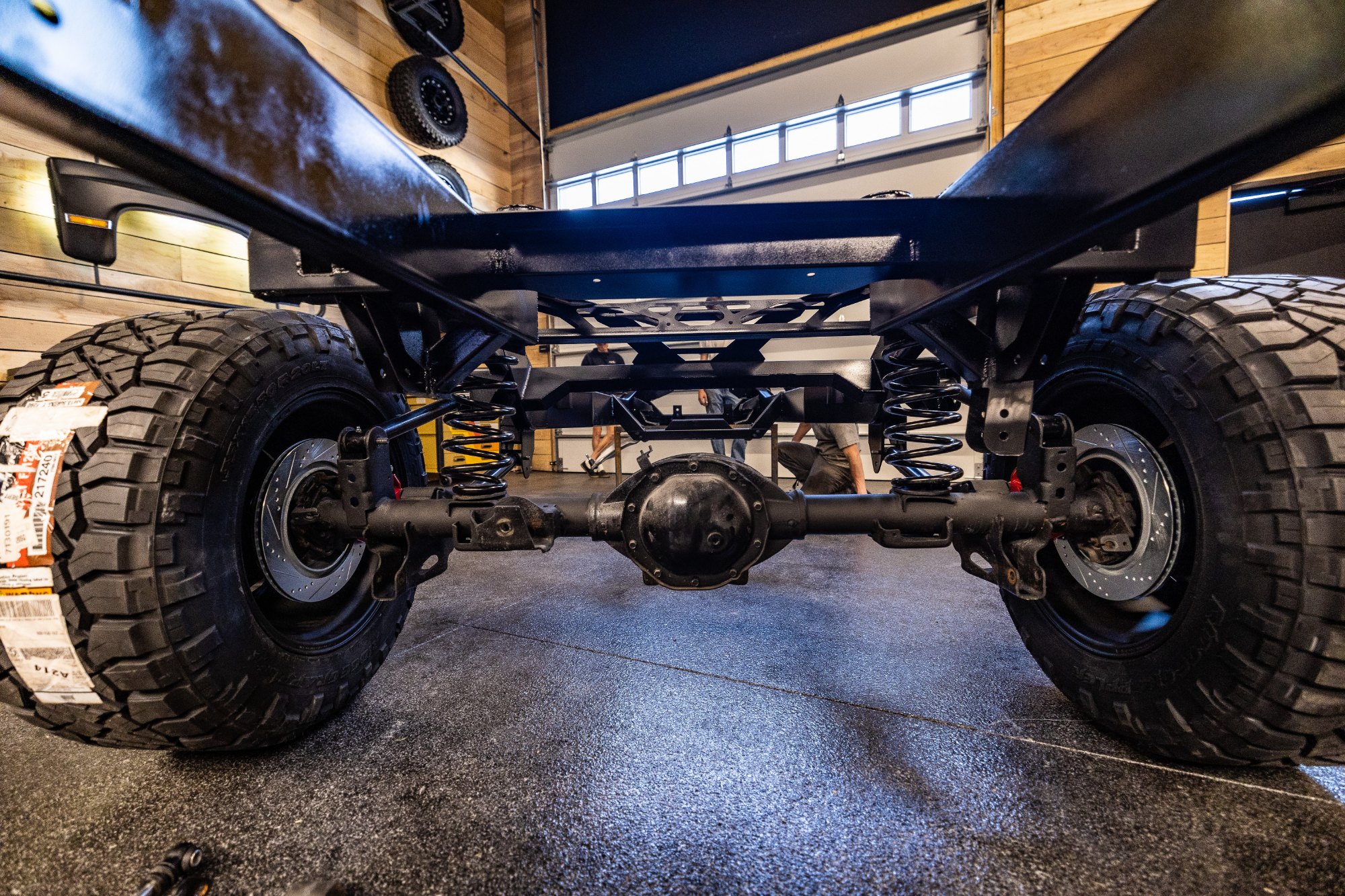
A multi-link rear
Leaf springs locate the rear axle and carry the weight at the same time, which is why an old truck hops and skates over rough pavement. A multi-link rear separates those jobs. The links control the axle and a Panhard bar keeps it centered under the truck, so the rear stays planted and soaks up the road. The rear stays composed over bumps, puts power down cleanly, and is built to tow.
What you notice behind the wheel
- A smooth, quiet ride at highway speed instead of a constant chatter.
- Steering that stays on center, so long drives stop being work.
- Flat, confident cornering.
- A rear end that stays planted over bumps and under power.
- The original look, because the chassis bolts to the factory body mounts.
Built to last underneath
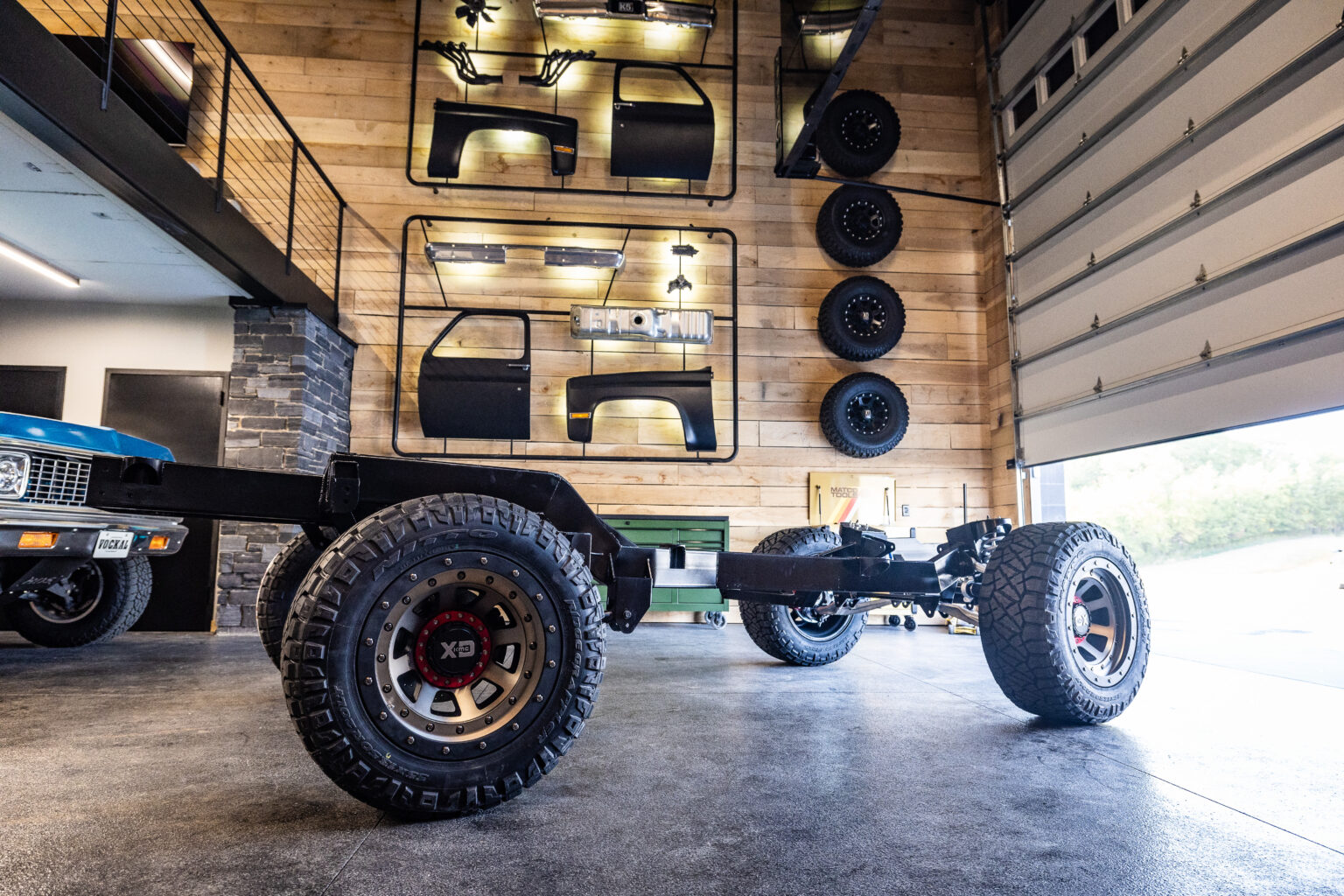
Every Frame-Werx frame is built from scratch and hot-dip galvanized inside and out, and it can be painted or powder coated black or any color over the galvanizing. It is rated for 800 horsepower and can be built for four-wheel or all-wheel drive.
Choose how far you go
Start with a bare frame, step up to a rolling chassis with suspension, brakes and axles, or have us build a complete running chassis. The chassis builder walks through every choice and keeps a running total.
Find your truck
- 1969–1972 K5 Blazer and GMC Jimmy
- 1973–1991 K5 Blazer and GMC Jimmy
- 1967–1972 Chevy K10
- 1973–1987 Chevy K10
- 1973–1991 Suburban
Common questions
Why do classic GM trucks ride so rough?
They were engineered for a different era. A solid front axle on leaf springs was built to haul and to survive, at a time when 55 miles an hour was the national highway limit. At 70 and up, every bump, rut and expansion joint comes straight through the steering wheel and the seat.
What actually improves the ride on a K5 Blazer or classic pickup?
The biggest change is underneath: independent front suspension so each front wheel moves on its own, sway bars front and rear to keep the body flat in corners, and a multi-link rear with a Panhard bar to keep the axle centered. That combination is what a Frame-Werx chassis is built around.
Will my truck still look original?
Yes. The chassis bolts to the factory body mounts, so the body, stance and proportions stay true to the truck. The change is in how it drives.
Can it still tow?
Yes. The multi-link rear with its Panhard bar is built to carry a trailer hitch, so you keep the work ability that made these trucks worth owning.
Which trucks does the Frame-Werx chassis fit?
1969 to 1991 Chevy K5 Blazer and GMC Jimmy, 1967 to 1972 Chevy K10 pickups, 1973 to 1987 squarebody K10 pickups and 1973 to 1991 Chevy and GMC Suburbans.