Sway Bars Front and Rear: Why Your Classic Truck Stops Leaning
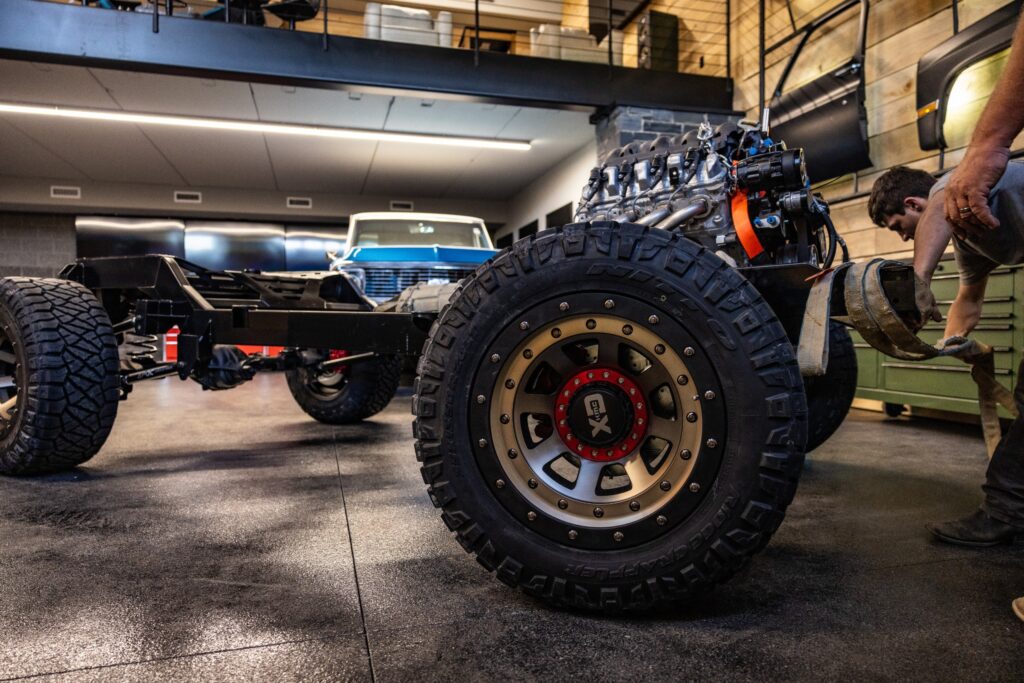
Tall, heavy and soft is a recipe for body roll, and classic GM trucks have all three. Take an off-ramp a little quickly and the whole truck leans, the tires scrub and you find yourself slowing down well before you need to. Sway bars are one of the simplest ways to change that feeling, and a Frame-Werx chassis has them at both ends.
What a sway bar does
A sway bar links the left and right sides of the suspension. When the truck starts to lean in a turn, the bar twists and pushes back, keeping the body flatter. On a straight road it stays out of the way, so the ride stays supple.
Why front and rear both matter
With a bar only at one end, that end does all the work, and the truck can feel nervous or push wide. Bars front and rear share the load, so the truck stays balanced, turns in cleanly and settles faster after a lane change or a gust of wind on the highway.
Working with the rest of the chassis
Sway bars do their best work alongside independent front suspension and a multi-link rear. The independent front lets each wheel follow the road, the sway bars keep the body level, and the multi-link rear keeps the axle planted. Together they give a classic truck the kind of handling and ride quality that simply was not part of the original design.