
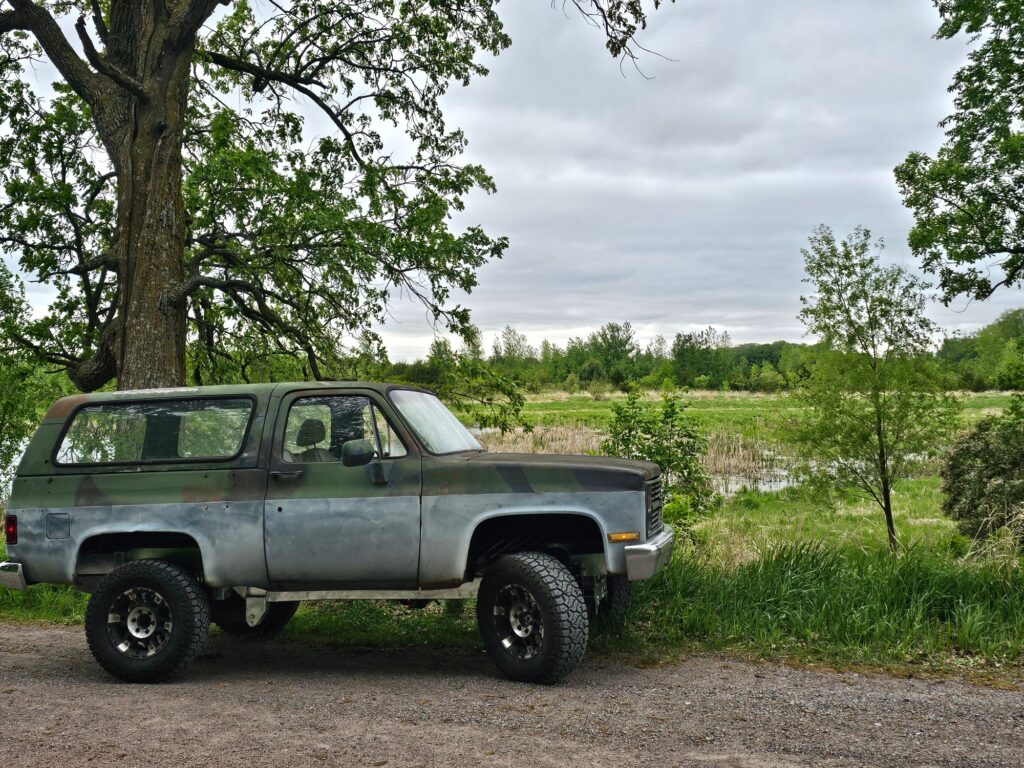
A note from Sean Spraungel, founder of Frame-Werx.
I love these trucks. The square lines, the sound, the way somebody always walks across a parking lot to tell you about the one their dad had. What I never loved was driving one for more than an hour.
That is the honest truth behind Frame-Werx, and it is why everything we build starts with one idea: modern ride quality for your restomod truck.
When GM designed the Blazer, the Jimmy, the Suburban and the K10, the speed limit topped out at 55 miles an hour. That was the job, and the trucks did it well. A solid front axle and leaf springs were tough, simple and cheap to fix.
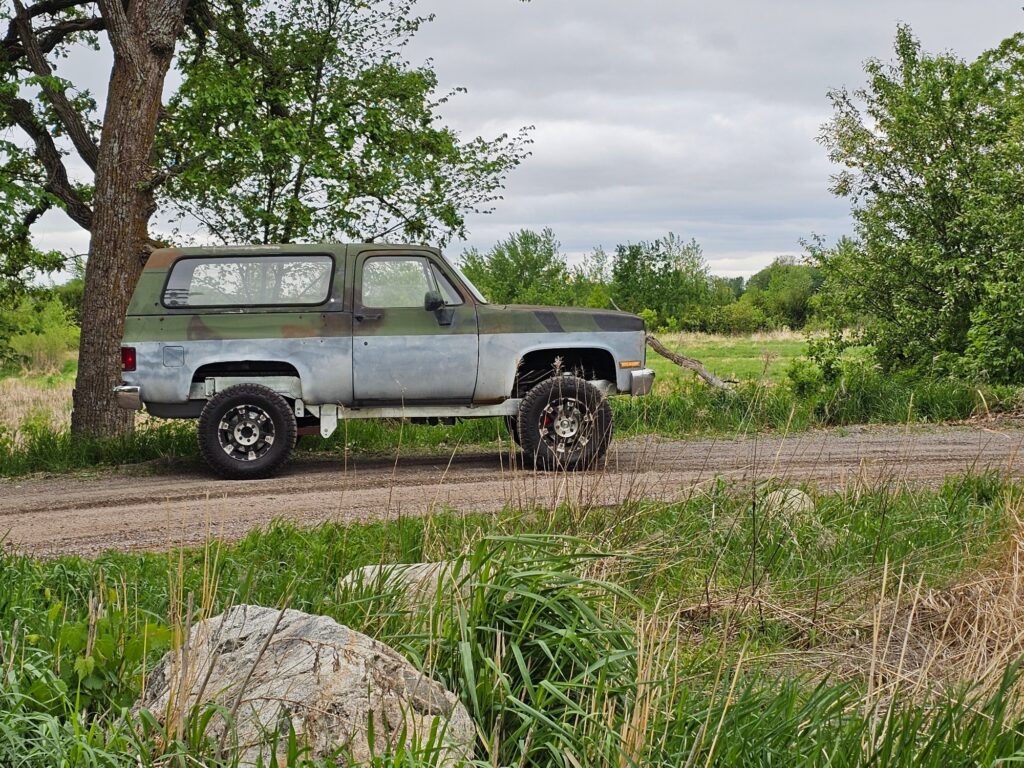
Now take that same truck onto the interstate at 75. The steering wanders, so you are correcting the wheel the whole way. Every expansion joint comes up through the seat. The body leans into every on-ramp. You get where you are going, but you show up worn out. Nothing is broken. The truck is doing exactly what it was designed to do, on roads and at speeds that do not exist anymore.
We kept running into that wall. We would finish a truck that looked like a million dollars and drove like it was still 1978. I wanted a classic truck I would actually choose to drive. Not trailer to a show. Drive.
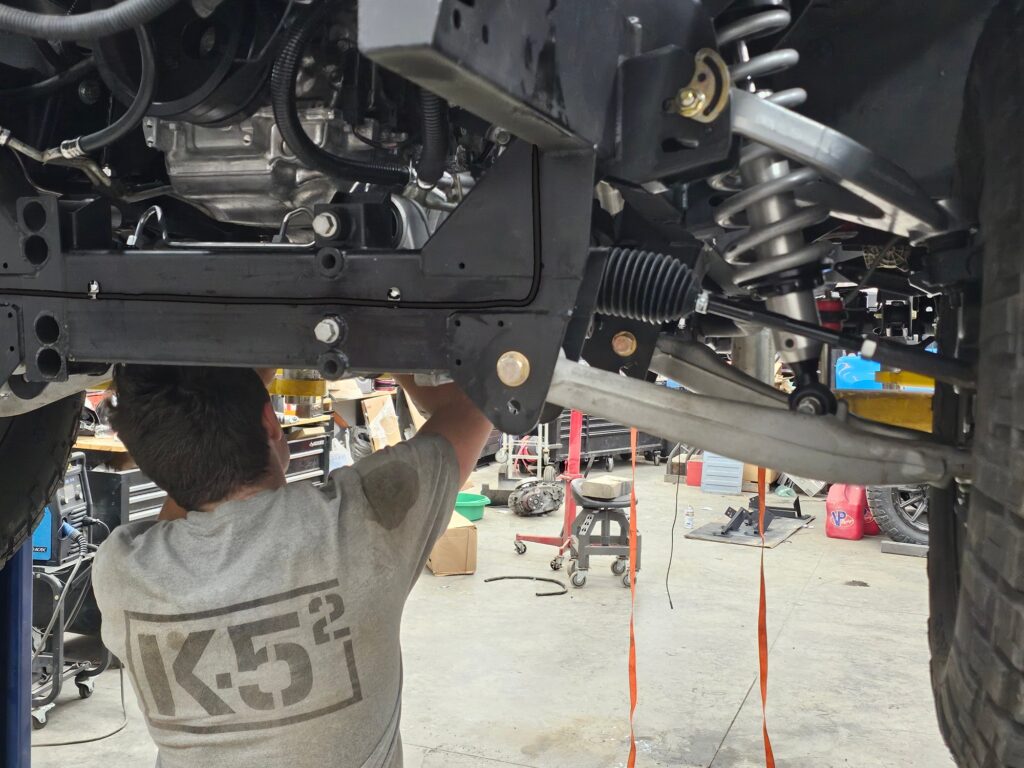
Independent front suspension. Each front wheel moves on its own, so a pothole under one tire no longer shakes the whole front of the truck. The steering gets precise, and the truck tracks straight down the highway instead of wandering inside its lane.
Sway bars front and rear. This is the one people notice first. The truck stays flat through corners, lane changes and on-ramps. That old roll you braced yourself for is gone.
A multi-link rear with a Panhard bar. A leaf spring is asked to do two jobs at once: hold the axle in place and spring the truck. It does neither one especially well, which is why the back end hops and skates on rough pavement. We split those jobs up. The links locate the axle, the Panhard bar keeps everything centered, and the springs are left to do one job: ride. The rear stays planted and smooth, and because the axle is properly located, you can hitch up a trailer and tow.
Add it all up and you get the reason we exist: ride quality, ride quality, ride quality.
Frame-Werx has been four years in the making. We built the prototype alongside another builder and then decided to take the chassis in our own direction. Our engineering template was a 1984 CUCV, the military version of the K5 Blazer, and we used it to set the body mounts, the ride height and the steering geometry. The chassis bolts to your body where the factory frame did, and the truck sits the way it should.
The suspension, steering and brakes come from a 2010-era full-size GM SUV, so when something wears out years from now, the replacement part is sitting on the shelf at your parts store. The chassis is built to handle up to 800 horsepower and is ready for all-wheel drive.
Before a frame leaves us, it is hot-dip galvanized inside and out. You can paint or powder coat right over it, in black or any color you like. It is a small part of the story, but it means the foundation under your truck will not quietly rust away.
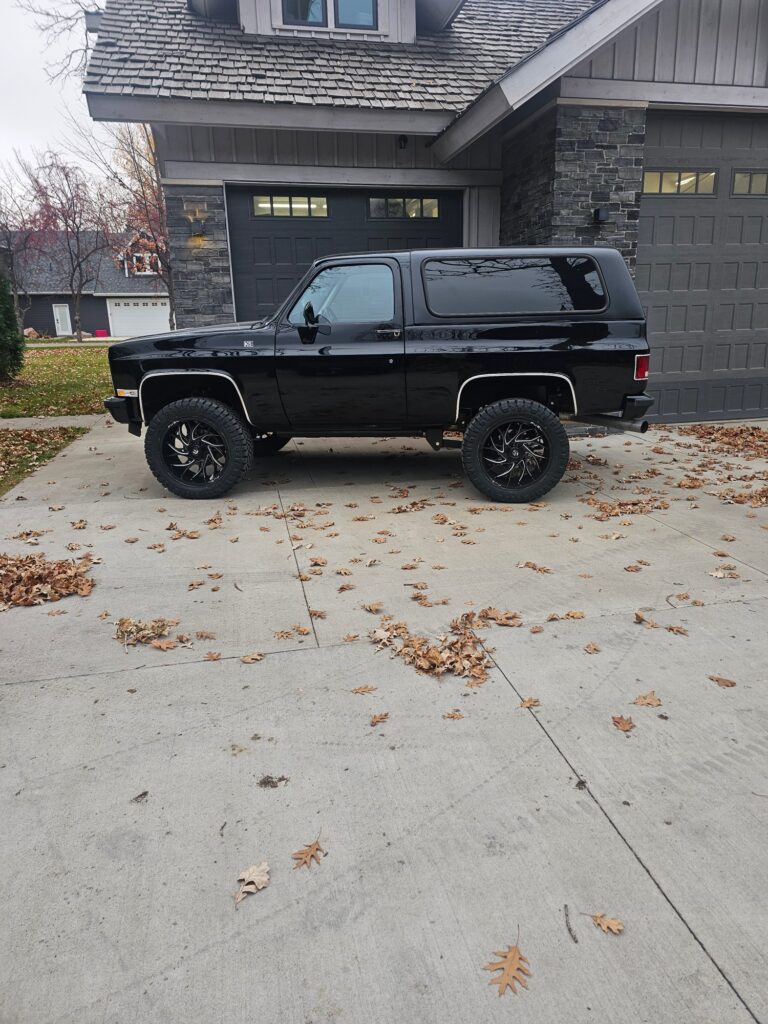
Everything we make at K5 Squared comes from the same place. We want the average do-it-yourselfer to finish a build with a product that looks and works like a professional built it, and we want our parts to be good enough that professional builders choose them too. Frame-Werx is the biggest version of that idea.
A restomod should not force you to choose between the truck you love and a truck you enjoy driving. Keep the body, the lines and the character. Give it the ride it always deserved.
Classic Truck Performance sat down with me at Dino’s Git Down 2025 to talk about how the chassis started, why we built it and where it is headed.
If you have a 1969 to 1991 Blazer or Jimmy, a 1967 to 1991 Suburban or a 1967 to 1987 K10 pickup that stays parked because it is no fun to drive, you are exactly who we built this for.
See how the ride changes · Build your chassis
Find the chassis for your truck: 1969–1972 K5 Blazer and Jimmy · 1973–1991 K5 Blazer and Jimmy · 1967–1972 K10 · 1973–1987 K10 · 1973–1991 Suburban
— Sean