Leaf Springs vs. a Multi-Link Rear: Ride, Traction and Towing
The rear suspension shapes how a truck feels as much as the front does. Classic GM trucks left the factory on leaf springs, and for hauling a load on a work site they did the job. For a restomod that spends its life on pavement, a multi-link rear is a different experience entirely.
Why leaf springs ride the way they do
A leaf spring has two jobs at once: it holds the axle in place and it carries the weight. Because one part is doing both, the axle can wind up under power and hop over bumps, and the spring rate that carries a load is rarely the one that rides well empty.
How a multi-link rear splits the work
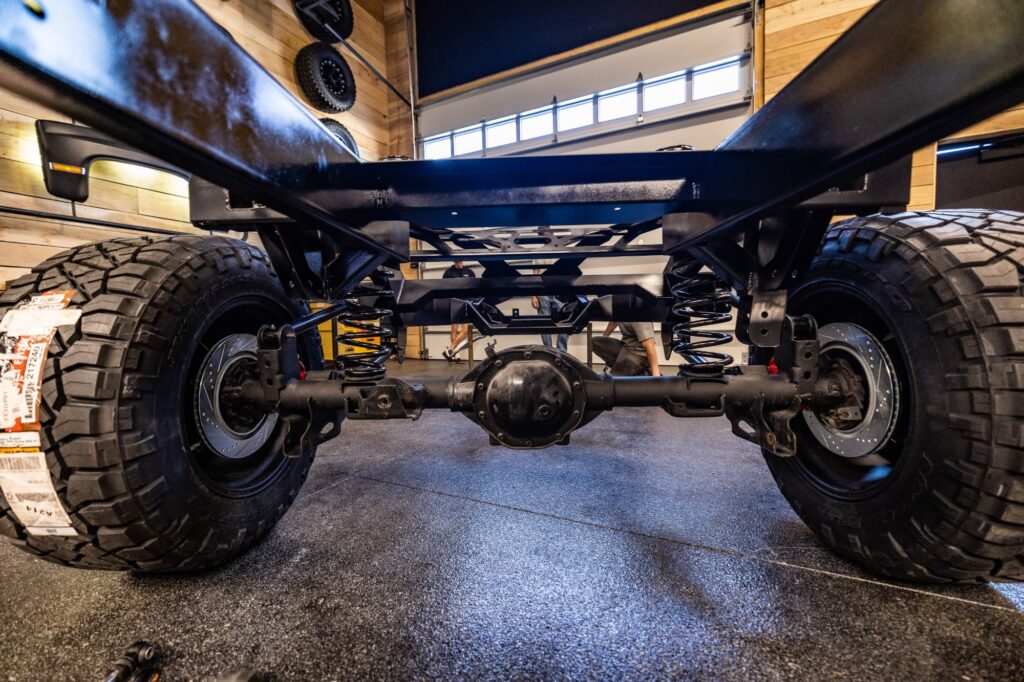
A multi-link rear separates those jobs. The links control where the axle goes and a Panhard bar keeps it centered side to side under the truck, so the springs only have to carry the weight and absorb the road. Each part can be tuned for what it does best.
What you feel
A smoother, more controlled ride over broken pavement.
Cleaner traction when you put power down, without axle hop.
A rear that stays planted through corners instead of stepping sideways.
It still tows
Comfort does not mean giving up the work. The multi-link rear on a Frame-Werx chassis, with its Panhard bar, is built to carry a trailer hitch, so your truck keeps the ability that made it worth owning in the first place.